(Guillermo Del Toro)
Most of us grew up with a version of Frankenstein: a brilliant scientist, a reckless experiment, and the price of playing god. And yes, the film still explores unchecked ambition, the risks that follow it, and what happens when science or innovation stretch beyond our control.
But this new adaptation, though inspired by the 1818 novel is really about emotional responsibility, the damage caused by neglect, and what happens when someone is brought into the world without guidance, safety, or love. Somewhere in the middle of all that, the story started reminding me of the boys at the juvenile center. Not because their lives resemble the plot, but because the emotional patterns felt familiar: Fear, confusion, longing to be loved.
Because this movie meant so much to me, I’ll break it up into a few of the pieces that felt the most meaningful.
Victor’s Father
Early in the movie, we meet Victor as a boy learning from his father, who is a wealthy and respected surgeon. Victor is naturally drawn to his father’s work, but what is passed down to him isn’t just scientific education but emotional conditioning. There’s a scene where his father is quizzing him on the human anatomy, and this is when we start to see how Victor is taught to perceive the world of emotions.
In the scene, his dad asks him to confirm the weight of the male and female human heart, Victor answers scientifically, and his dad praises him while immediately shutting down any deeper meaning by saying “Correct. there is no spiritual content in tissue, and no emotion in a muscle.”
Elizabeth
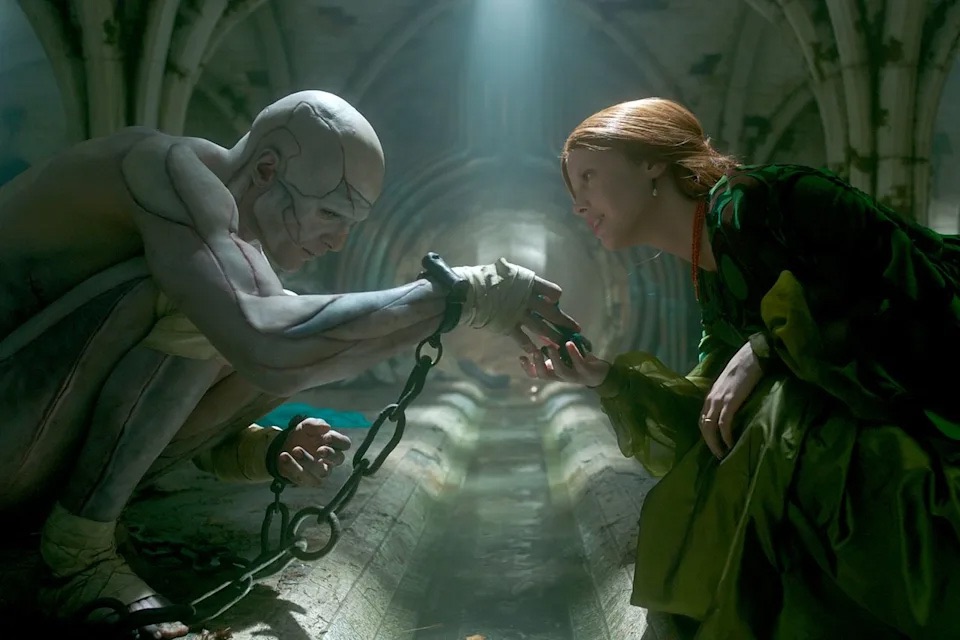
Later in the movie, we meet Elizabeth. She becomes the moral opposite of Victor. She approaches the creature out of curiosity and compassion, not fear. Her worldview is shaped by natural theology and her understanding of God. The symmetry of an insect’s wings, the deliberate architecture of a spine, the tiny miracles hidden inside ordinary things. She believes creation leaves clues everywhere, and that nothing made with intention is ever truly monstrous.
So when she finally meets the creature, she doesn’t see a threat. She sees pain, vulnerability, and fear. She says one of the most important lines in the movie: “In his eyes I saw pain, and what is pain if not evidence of intelligence?”. It made me think that where some see failure, others see fragility and potential.
The Nervous System
On a separate scene, there’s a moment where Victor’s father quizzes him about the tricuspid valve. The moment itself is brief, but it made me curious enough to look it up.
The irony: even though the valve itself isn’t part of the nervous system, the heart is wired into our emotional lives through the vagus nerve. So while Victor’s father insists that the heart has no emotional meaning, biology disagrees. The heart may not “feel” but it responds instantly to fear, love, grief and longing.
The creature is the clearest example of this. His confusion, panic, and anger aren’t signs of monstrosity, but instead, they are the reactions of a nervous system born into fear. With no guidance or stable connection, he spirals when he’s rejected, yet softens the moment he’s shown kindness.
And in a story about a creature built from the body parts of people society had already written off, he enters life carrying the same neglect they suffered. He starts exactly where they ended: unseen and unvalued.
The End
By the end, the creature finally gets to speak for himself. He tells Victor,
“Everyone has told my story except me.” It’s the first time he claims his own identity and something unexpected happens… I won’t spoil it in case you decide to watch it, and I strongly recommend that you do.
This isn’t a story about a monster. It’s a story about cycles, how they’re created, how they’re repeated, and how they can come to an end.
It’s a reminder of the role society plays in deciding who becomes an outcast, who is misunderstood, and who gets labeled dangerous simply because they look or behave differently.
And for me, it’s also a reminder of what I see every Sunday:
That human beings aren’t born as monsters the way Dr. Frankenstein suggests, nor broken, bad, or troubled the way incarcerated youth are often labeled. We become who we are based on the hands that hold us or the ones that never did.
 prismlab.blog
Leave a comment