This is a story about the belief that small acts of kindness create ripples even from inside a juvenile detention center.
This past month, I began volunteering with a nonprofit organization that visits juvenile centers to pour love into kids who need it most. We do this through curated activities that help them practice kindness, anger management, forgiveness, and self awareness — while also teaching financial literacy, encouraging further education, and connecting them with real world resources and opportunities.
Other days, we simply show up to listen, to hear their stories, their backgrounds, their present realities, and most importantly, the plans they hold for their future.
Let me paint the picture.
The first thing we do when we walk in is say hello to every one of the kids, with a handshake and a smile. It’s a small act with a clear purpose: greeting each one with touch and warmth, letting them know they matter, and modeling a simple habit they can carry into the outside world.
The space is divided into two large rooms: concrete walls, gray floors, blank everything. No color. No art. No softness. The only life in the room is the one these kids bring in through their noise, their laughter, their boredom, their stories and the fights that break out more often than anyone would like to admit.. Because the truth is, they’re locked up. Their days are filled with routine, and the only break from it is when we show up on Sundays.
We go through security, hand over our belongings, and walk the long hallway toward the unit. You can already hear it: laughter, yelling, commotion. Life, in its rawest form. Inside, some kids are playing cards, others writing songs in their notebooks, a few are arguing over chess, and some are just watching, existing, and surviving.
There’s no structure. You connect where you can, with who you can, for as long as you can. Everything else is improvisation.
And yet, each Sunday, you start to notice something deeper.
Some of these kids are happy, loud, confident, funny. Others are quiet, withdrawn, carrying invisible weight and scars. Some are angry, untrusting, quick to test your intentions, guarded by layers of defense built from too many disappointments. And then there are the ones whose spirit feels almost broken, the ones who look at you but don’t quite see you yet. Each of them, in their own way, is a mirror of both pain and potential.
Today’s activity was a mentorship panel. One of the kids took the lead, hosting the session with a stack of question cards. He stood in front of the group, nervous but proud and started asking us, one by one:
- “What motivates you to be here with us?”
- “What’s your biggest aspiration in life?”
- “Do you actually believe we can make it out there?”
- “What do you see when you look at us?”
We answered honestly as we met them as equals. There was no hierarchy, just respect, compassion, and transparency. Some mentors opened up about their struggles growing up. Others spoke about forgiveness, resilience, and the courage it takes to start over. You could feel something shift in the room, that rare moment when guards (the emotional kind) start to lower.
By the end, we handed out treats and stayed for one on ones.
I sat with the boy who had hosted the panel. I asked him how he felt leading it, and he told me he’d been so nervous. I smiled and said, “Could’ve fooled me… you looked confident, and you did a fantastic job.”
Then I asked, “Are you proud of yourself?”
He paused for a moment and said, “I don’t know. Nobody’s ever asked me that before.”
I looked at him and said, “Well, I think you should be. You have leadership skills. What you did today took courage, confidence, preparation, and a willingness to learn and be curious. That’s all leadership.”
He smiled and stayed quiet.
As I drove home, one question lingered in my mind:
What inspired you to do this? My answer was simple, and not.
I was tired of observing from the sidelines and tired of analyzing what’s broken and expecting others to fix it. It became clear that real progress doesn’t depend solely on systems, elected leaders, or institutions, but on how we each choose to participate in the world around us.
So maybe the real question is: what can we do, right here, right now?
Every Sunday, I get to witness impact. We pour love and hope into these kids. We help them believe again, in themselves, in their future, in the idea that they’re more than their mistakes.
Could it all be done on a larger scale, with government funding and policy reform? Absolutely. But waiting for it is a slow death of hope.
The truth is, change doesn’t start with “them,” as we so often argue while pointing fingers and saying, “that’s their responsibility.”
Today, I wholeheartedly believe that change starts with us. I’ve learned that lasting change is rarely dramatic. It begins with individuals who show up consistently, who act with integrity and empathy even when recognition is unlikely.
There’s a movie called Pay if Forward, one of my all time favorite movies.
It’s about a teacher who assigns a young kid to come up with an idea to do something good for three people and instead of paying it back, they each pass it on to three more.
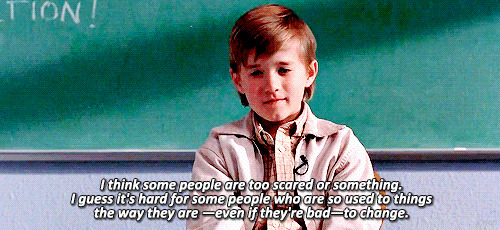
Paying it forward is an expense we can all afford, and one that humanity can’t afford to live without.
Every Sunday, I see the same idea at work inside those walls. An idea born not from idealism, but from courage. The courage to believe that what we do, no matter how small, matters.
And maybe, if we all keep showing up in our own ways: one handshake, one story, one act of kindness at a time, the ripples will reach farther turning into a chain reaction. That’s the change we can control.
Because if compassion can reach the locked rooms of a juvenile detention center, imagine what it could do if it reached the boardrooms, the classrooms, the neighborhoods, and the dinner tables that shape our interactions in the world.
Maybe the real question isn’t whether change is possible but maybe it’s this:
What would happen if we all stopped waiting for the world to change and started tending to the parts within our reach. Our homes, our communities, our choices, believing that real transformation begins not in grand gestures, but on the daily choices made by ordinary people who decide to do what they can, with what they have, from where they are.
 prismlab.blog
Leave a comment